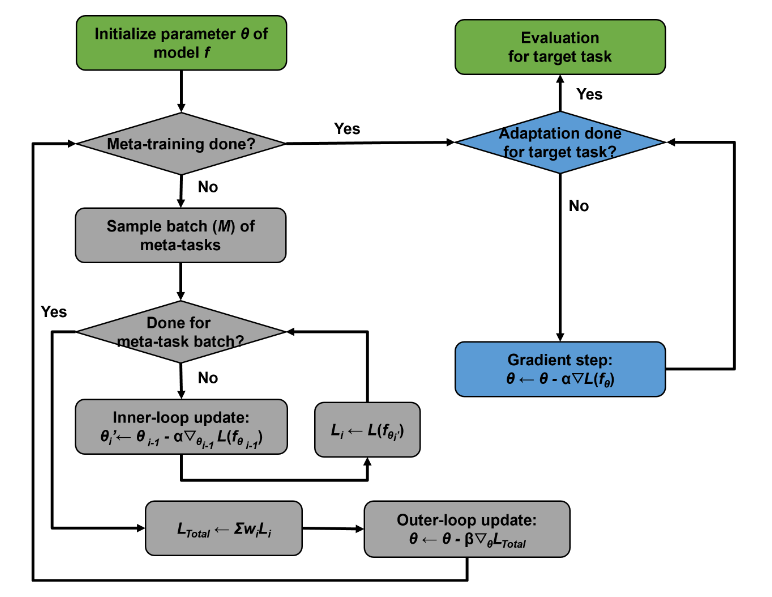
Meta-learning has emerged with promising results for the ability to quickly learn from a few examples, i.e., few-shot learning. Model agnostic meta learning (MAML) is a notable example and has shown its effectiveness on various few-shot learning tasks. The research community has made several independent improvements to the MAML. However, the performance gains of each extension and their combinations have not been explored yet. This paper examines five extensions to the MAML and empirically studies their impacts on regression and classification problems. We also examine various combination cases as well as the all-in-one case of the extensions. Our experiments show that the all-in-one combination provides state-of-the-art performance overall. We also conduct an ablation study and show the contribution of each extension to performance.
2020
Deep learning based facial expressions recognition system for assisting visually impaired persons
Hendra Kusuma, Muhammad Attamimi, and Hasby Fahrudin
Bulletin of Electrical Engineering and Informatics, Jun 2020
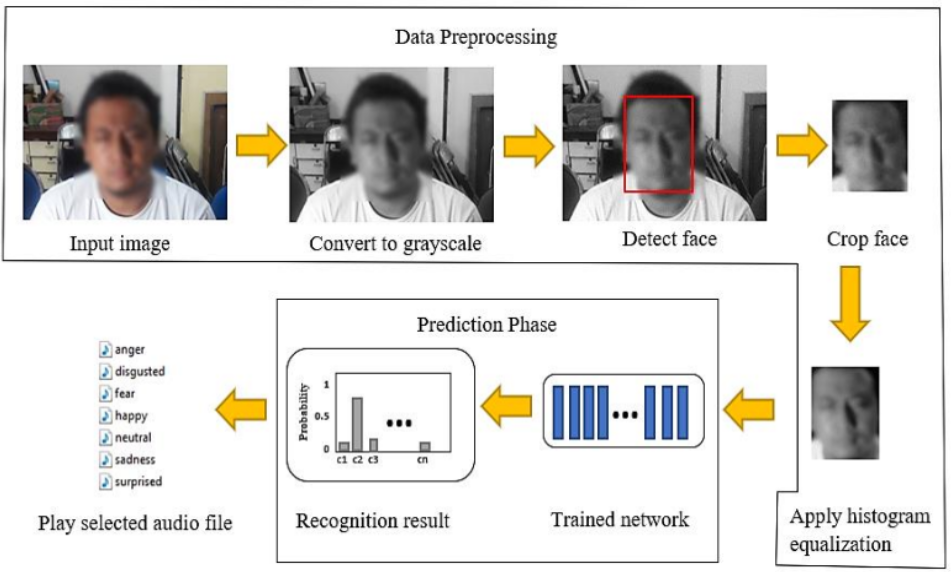
In general, a good interaction including communication can be achieved when verbal and non-verbal information such as body movements, gestures, facial expressions, can be processed in two directions between the speaker and listener. Especially the facial expression is one of the indicators of the inner state of the speaker and/or the listener during the communication. Therefore, recognizing the facial expressions is necessary and becomes the important ability in communication. Such ability will be a challenge for the visually impaired persons. This fact motivated us to develop a facial recognition system. Our system is based on deep learning algorithm. We implemented the proposed system on a wearable device which enables the visually impaired persons to recognize facial expressions during the communication. We have conducted several experiments involving the visually impaired persons to validate our proposed system and the promising results were achieved.